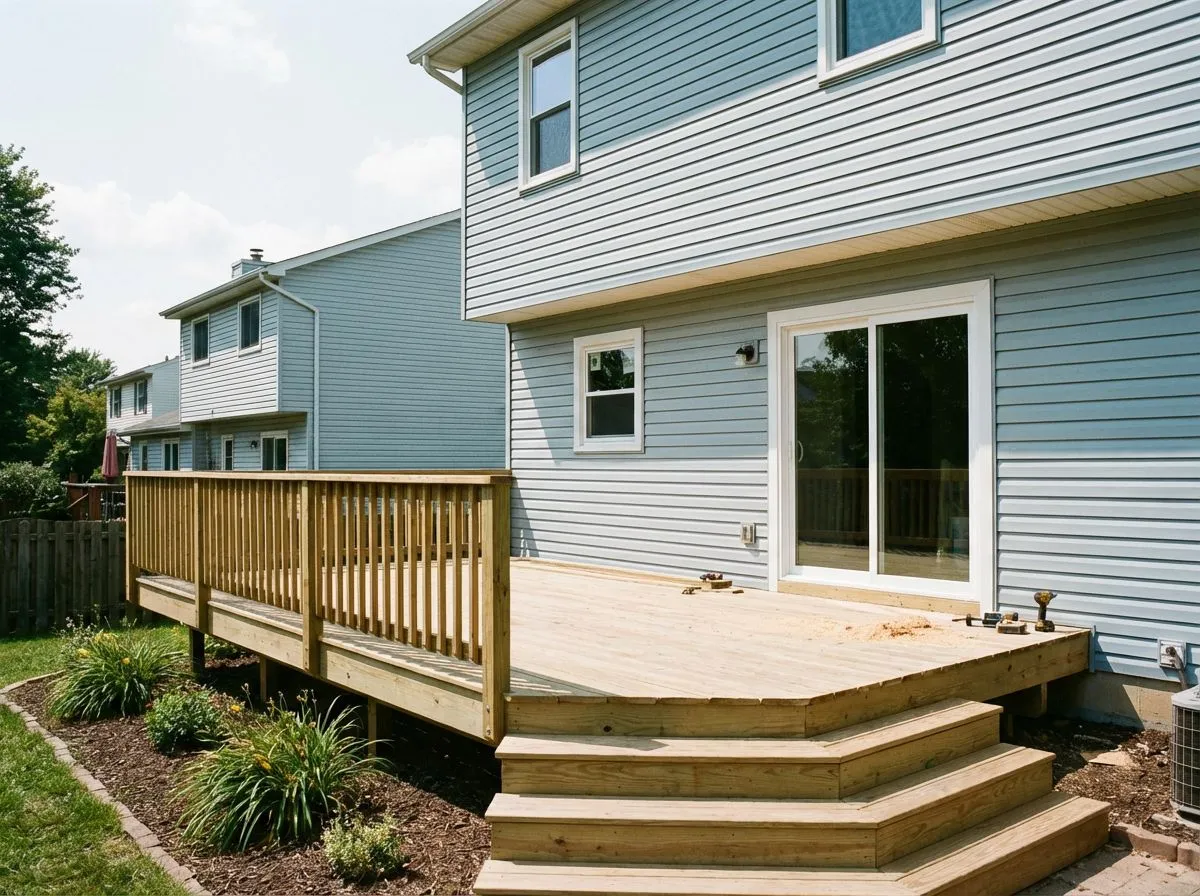
Sliding Patio Door Repair or Replacement: How to Decide
A sliding patio door works harder than any other door in the house. It gets opened with an elbow while you carry a tray outside, it takes the full force of a west-facing afternoon sun, and in Connecticut it spends five months a year holding back cold air. So when a slider starts sticking, fogging, or letting in a draft you can feel from the couch, it is worth knowing whether you are looking at a repair or a replacement.
The honest answer is that it depends on which part has failed. Some patio door problems are genuinely fixable in an afternoon. Others are the door telling you it has reached the end of its service life, and putting money into it only delays the real solution. Here is how we walk homeowners through the decision.
Start with what is actually failing
Before anyone talks about a new door, figure out which component is the problem. A slider is really four systems in one frame: the rollers and track it moves on, the glass unit, the weatherstripping and seals, and the lock hardware. Each one fails differently, and each one points to a different answer.
- It drags, grinds, or takes two hands to open. Usually the rollers, the track, or both. Rollers wear flat and tracks collect grit and get dented.
- The glass is foggy or has streaks between the panes. The seal on the insulated glass unit has failed and moisture is inside the glass. Cleaning will never fix it.
- You feel a draft along the edges or at the bottom. Worn weatherstripping, a bad sweep, or a door that has fallen out of square in its frame.
- The latch does not line up anymore. Often a sign the frame itself has shifted or the door is sagging, which is a structural issue rather than a hardware one.
- Water shows up on the floor inside after heavy rain. The sill pan or flashing behind the door is failing, and that is the one to take seriously right away.
When a repair makes sense
Repair is the right call more often than people expect, especially on a door that is otherwise sound. If the frame is square, the glass is clear, and the door is not that old, replacing the worn parts can buy you many more good years.
- Rollers are worn but the track is intact, or the track can be cleaned and a repair cap installed.
- Weatherstripping and the door sweep have gone hard and flat, which is normal wear and inexpensive to renew.
- The handle, latch, or lock has broken but the door still sits square and slides properly.
- A single pane of glass is cracked in a door whose frame and seals are otherwise in good shape.
When replacement is the better call
There is a point where repairs stop being economical, and a fair contractor will tell you when you have reached it rather than selling you a fourth service call on the same door.
- The glass is fogged. On most patio doors the insulated glass is not serviceable on its own, and once one panel has failed the other is usually not far behind.
- The frame is rotted, racked, or out of square. No amount of new hardware fixes a frame that has moved. This is common on older aluminum and early vinyl sliders.
- It is single pane or early double pane. A door that size is a large hole in your thermal envelope, and older units simply do not perform in a Connecticut January.
- Water is getting behind the door. The right fix means opening up the sill, flashing it correctly, and setting a new door, not sealing the symptom with caulk.
- You have repaired it more than once already. Two or three fixes on the same door usually means the door itself is the problem.
Sliding, French, or something else?
If you are replacing the door anyway, it is worth asking whether the same style is still the right one. A slider is hard to beat when floor space is tight, because nothing swings into the room or out onto the deck, and modern sliders seal far better than the ones they replace. French doors give you a wider opening and a more traditional look, but they need clear space to swing. Sliding French doors, which pair the wide stiles and grille pattern of a French door with slider operation, are a good middle ground on an older house where a plain slider would look out of place.
The other decision is material. Vinyl and fiberglass both handle New England temperature swings well and need very little upkeep. Wood-clad doors give you a real wood interior with a protected exterior, which suits period homes. Whatever the material, look at the glass package: low-E coating and an insulating gas fill make a real difference on a door with that much surface area facing the weather.
What the installation actually involves
A patio door replacement is usually a one-day job for a straightforward opening, though we plan on more time when there is rot to repair or the opening needs to be resized. The old door and frame come out, we inspect the rough opening and the framing beneath it, and any damaged material gets rebuilt before anything new goes in. Then the sill gets a proper pan and flashing, the new door is set level and square, the perimeter is insulated and sealed, and the interior and exterior trim goes back on.
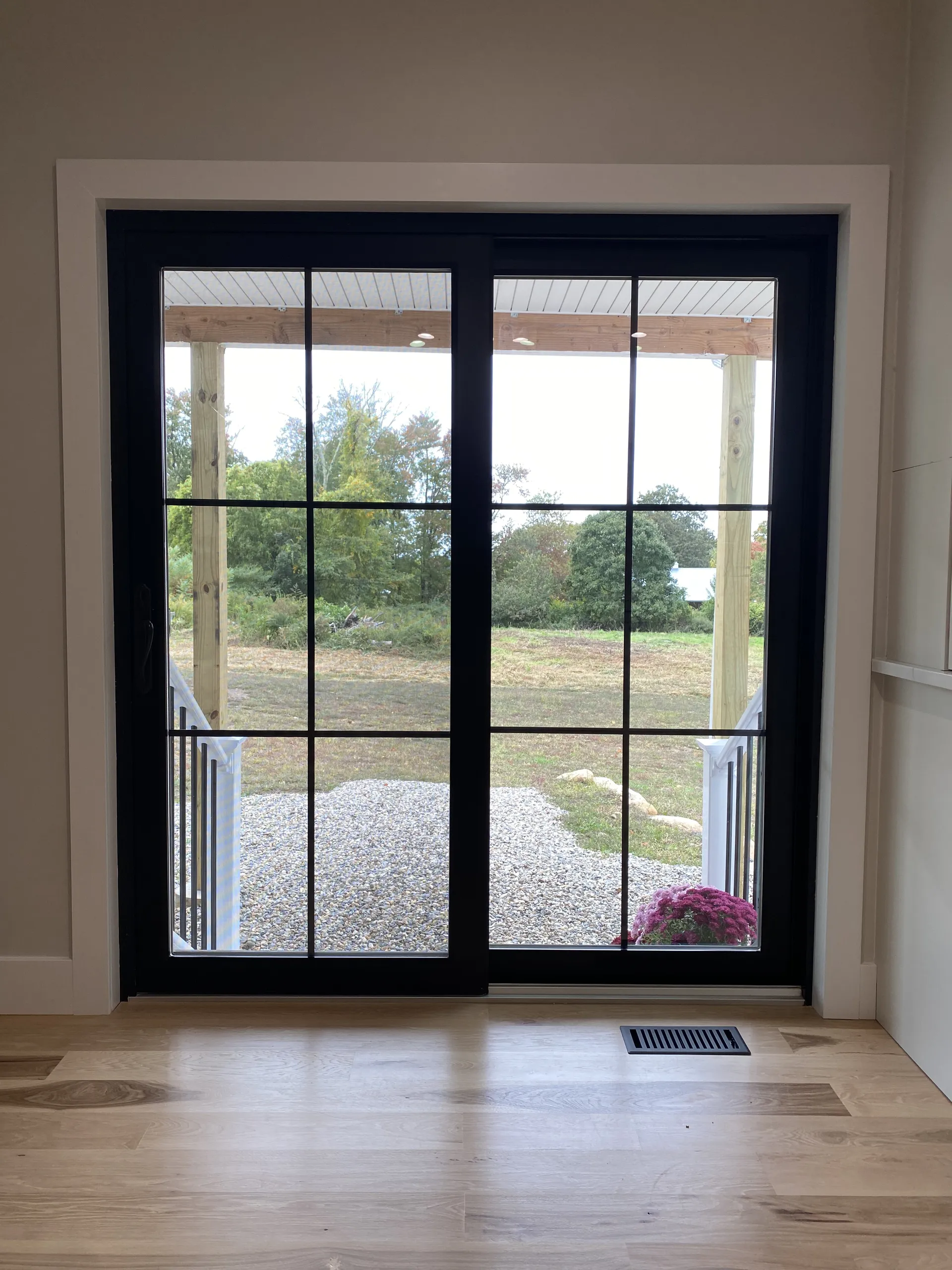
That flashing step is the part homeowners never see and the part that decides whether the door still performs in ten years. A door set into an opening that was never properly pan-flashed will eventually let water into the framing, no matter how good the door itself is. In the photo below, the flashing tape around the new patio door and windows is still visible because the trim and siding have not gone back on yet.

What shapes the scope of the project
Every patio door project is a little different, and a few things move the needle more than others:
- Whether the opening stays the same size. A same-size swap is straightforward. Widening an opening means framing, a new header, and interior and exterior repair around it.
- The condition of what is behind the trim. Rot in the sill or framing has to be rebuilt, and you rarely know the full extent until the old door is out.
- Door style, material, and glass package. A stock-size vinyl slider and a custom wood-clad sliding French door are very different projects.
- Access and finishes. A second-story door onto a deck, or one surrounded by tile or stone, takes more care to remove and re-trim.
Thinking about a patio door in Connecticut?
If your slider sticks, fogs, or leaks cold air, the fastest way to an answer is to have someone look at it in person and tell you honestly which parts have failed. Magee Homes replaces patio, entry, and storm doors for homeowners across East Hampton, Portland, Middletown, and the surrounding towns. See how we work on our windows and doors page, or contact us for a free consultation.
Sliding Patio Door Questions
Common questions from Connecticut homeowners repairing or replacing a sliding patio door.
Plenty of slider problems are repairable. Worn rollers, a dirty or dented track, tired weatherstripping, and broken latch hardware can all be fixed on a door whose frame and glass are still sound. It is the frame and the insulated glass that usually decide replacement, because neither is practical to renew in place.
That haze means the seal around the insulated glass unit has failed and moisture has gotten inside the glass. It cannot be cleaned out, and the door has lost most of the insulating value that sealed space provided. On most patio doors the practical fix is a new door.
A same-size replacement in a sound opening is typically a one-day job. Add time if the sill or framing needs rebuilding, if the opening is being resized, or if surrounding tile, stone, or siding has to be cut back and repaired.
Neither is better, they just suit different rooms. French doors give a wider, more traditional opening but need clear floor and deck space to swing. Sliders take up no swing space at all, which matters in a tight room. Sliding French doors split the difference and often look right on an older home.
Yes. We prepare the opening first and keep the house open for as short a stretch as possible, so a same-size replacement is very manageable even in cold weather. If the framing turns out to need rebuilding, we will tell you what that means for the schedule before we start.