Do You Need a Storm Door? What Connecticut Homeowners Should Know Before Winter
Every September, once the first cool mornings show up, the storm door calls start. It is a sensible instinct. A storm door is one of the few exterior upgrades that can be done in an afternoon, and it feels like the obvious way to get a drafty entry ready for a Connecticut winter.
Sometimes it is exactly the right move. Sometimes it is the wrong fix for the actual problem, and in a few cases it can damage the door behind it. Here is how we walk homeowners through the decision, based on the entries we install and service around East Hampton, Portland, and the surrounding towns.
What a storm door actually does
A storm door is a second, lighter door mounted on the outside of your entry, in the same opening. It does a few things well:
- It creates a pocket of still air in front of the entry door, which takes the edge off wind and cold hitting the main door directly.
- It shields the entry door from rain, snow, and sun, which is why the paint and weatherstripping on a door behind a storm door last noticeably longer.
- With the glass swapped for a screen, it lets you ventilate the house in spring and fall without opening the door to bugs.
- It adds a second latch and a closer, so a door that gets left ajar by kids or the dog stays closed.
What it does not do is fix a bad entry door. If the main door is warped, the bottom rail is soft, the glass is fogged, or you can see daylight at the threshold, a storm door hides the problem for a season and then you still have a bad door. In that case the money is better spent on the entry door itself, which is a bigger job but solves the actual issue. Our window and door replacement page covers what that involves.
One more thing worth knowing: there is no ENERGY STAR rating category for storm doors, so they do not qualify for the federal energy tax credit the way qualifying replacement windows and entry doors can. The energy benefit is real but modest, and it is largest when the door behind it is older or fully exposed to weather.
When a storm door makes sense in Connecticut
The clearest case is a solid, older entry door you want to keep. Plenty of homes around here have a wood door that is in good shape and suits the house. A storm door protects that door from the weather and lets it keep going for years.
An exposed entry with no porch roof or overhang is the second case. A door that takes wind-driven rain and snow head-on benefits the most from a buffer in front of it.
Back and side doors are often better candidates than the front. The door off the deck, the mudroom, or the garage side entry usually gets more traffic, more slamming, and more weather, and a storm door with a screen makes those rooms far more pleasant in the shoulder seasons.
And if you want to open the house up on a mild October afternoon without letting the bugs in, a storm door is the simplest way to get a screened entry.
When a storm door is the wrong call
This is the part most people have never heard, and it matters. A storm door with glass in front of a dark-colored entry door that gets direct afternoon sun creates a heat trap. The air between the two doors can get hot enough on a sunny day to soften finishes, discolor paint, and in the worst cases warp a fiberglass or steel door or its trim. Many entry door manufacturers limit or exclude warranty coverage for that kind of damage when a storm door is installed, particularly on dark colors with a south or west exposure.
So before you add a storm door, look at three things: the color of your entry door, which direction it faces, and how much afternoon sun it gets. A white or light door on a north-facing, shaded entry is a safe bet. A black fiberglass door facing west with no shade is not, and we will say so. If you want a storm door there anyway, a ventilating style that can be left partly open in summer, or a lighter-colored entry door, reduces the risk. It is also worth checking the warranty paperwork for your entry door if you still have it.
The other wrong-call situation is the one above: a storm door being asked to cover for an entry door that needs replacing. If you are not sure which side of that line you are on, the same signs we use for patio doors apply. We covered those in our post on sliding patio door repair versus replacement.
Choosing the right style
Storm doors come in three basic configurations, and the right one depends on how you will actually use it.
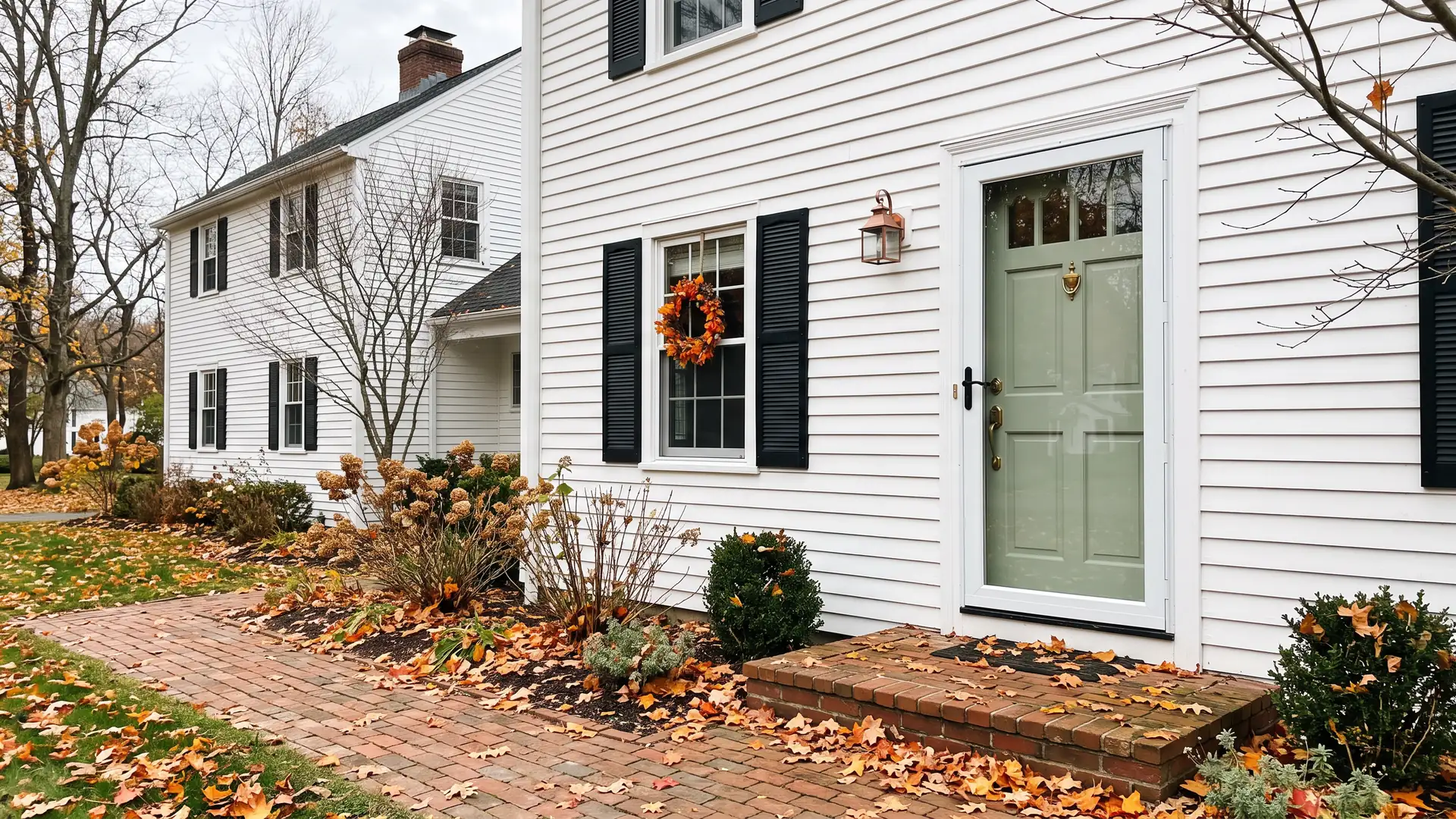
Full-view doors are one large pane of glass, top to bottom, with a separate screen panel you swap in for the warmer months. They show off the entry door behind them and let in the most light. They are the most popular choice on a front entry, and the door in the photo above is a full-view unit on a colonial with an exposed front step, which is exactly the kind of entry that benefits most. The trade-off is storing the screen panel in the off season.
Ventilating doors have glass panels that slide up or down with a screen built in behind them, so you can open the top or bottom for air without changing anything out. They are the practical choice for a side or back door that gets used for ventilation all the time.
Retractable screen doors are a full-view door with a screen that rolls up into the frame when it is not in use. You get the clean look of full glass with a screen available in seconds, and nothing to store. They cost more, and the screen mechanism is the part most likely to need attention over the years.
A few choices come after the style. Low-E glass is worth it in our climate: it reflects heat back into the house in winter, reduces solar gain in summer, and cuts the UV that fades the entry door’s finish. Frame color should match or complement the entry door and the trim. Hardware matters more than people expect, since the storm door handle has to clear the entry door handle. A thick decorative handleset on the entry door sometimes needs a low-profile storm door handle or a spacer to work, and it is much easier to sort that out before the door is ordered than after.
What installation involves
A storm door mounts to the exterior casing, or brickmould, around your entry. That is the first thing we check, because a storm door hung on rotted or split casing will never close right, and we see plenty of casing around here with soft spots at the bottom corners where water has been sitting. Sometimes the casing needs repair or replacement before the door goes on, which is worth knowing up front.
From there, the door is sized to the opening, since storm doors have far less adjustment than a prehung entry door, and hung plumb and square so the closer pulls it shut evenly and the sweep seals along the threshold. A straightforward install is usually a couple of hours. Casing repair or an out-of-square opening on an older home adds to that.
Because a storm door does not change the size of the opening or the structure, it does not typically require a building permit. That is different from replacing an entry door with a larger unit or adding sidelights, which does. We confirm the requirements with your town whenever a project is close to the line.
Getting the rest of the entry ready for winter
If you are already thinking about the front door, a few other things are worth checking before the cold sets in:
- Weatherstripping on the entry door. Close the door on a sheet of paper at several points. If it pulls out with no resistance, the seal is gone.
- The sweep and threshold. Daylight under the door means cold air, and it is a quick fix.
- Closer tension on an existing storm door. Closers slow down in cold weather; a small adjustment keeps the door from being held open by wind or slamming shut.
- Fogged glass in the entry door or sidelights. That is a failed seal, and it will not clear on its own.
Small fixes like these often solve a draft on their own, and we will tell you when that is the case rather than sell you a door you do not need.
Talk to a local door installer
Whether you need a storm door, a new entry door, or just an honest opinion on which one, we are a short drive away in East Hampton and we install both. Take a look at some recent entries in our project gallery, learn more about our window and door services, or schedule a free consultation before the weather turns.
Storm Door Questions
Common questions from Connecticut homeowners deciding whether to add a storm door before winter.
Some, but not as much as people expect. The still air between the two doors reduces heat loss through the entry, and the benefit is largest when the entry door is older or fully exposed to wind. Storm doors are not an ENERGY STAR category and do not qualify for the federal energy tax credit. If the main door is drafty or damaged, replacing it saves more.
It can when the entry door is a dark color, faces south or west, and gets direct afternoon sun. Heat builds up between the two doors and can discolor or warp the finish, and many entry door manufacturers exclude that damage from their warranty. Light-colored or shaded entries are generally fine, and a ventilating storm door reduces the risk.
Low-E glass. It reflects heat back into the house in cold weather, reduces solar gain in summer, and blocks the UV that fades the entry door behind it. It costs a bit more than clear glass and is worth it on an entry that gets sun.
Yes. The entry door stays closed for nearly the whole job, since the storm door mounts to the exterior casing. If the casing needs repair first, we do that in the same visit and keep the house open as briefly as possible.
Generally no, because a storm door does not change the opening or the structure. Replacing an entry door with a larger unit, adding sidelights, or changing the opening size usually does require a permit. We confirm with your town’s building department when a project is close to that line.
If the entry door is solid, seals well, and you want to protect it or add a screen, get a storm door. If the entry door is warped, rotted at the bottom, drafty with the weatherstripping already replaced, or has fogged glass, replace the entry door. A storm door in front of a failing door only postpones the same repair.